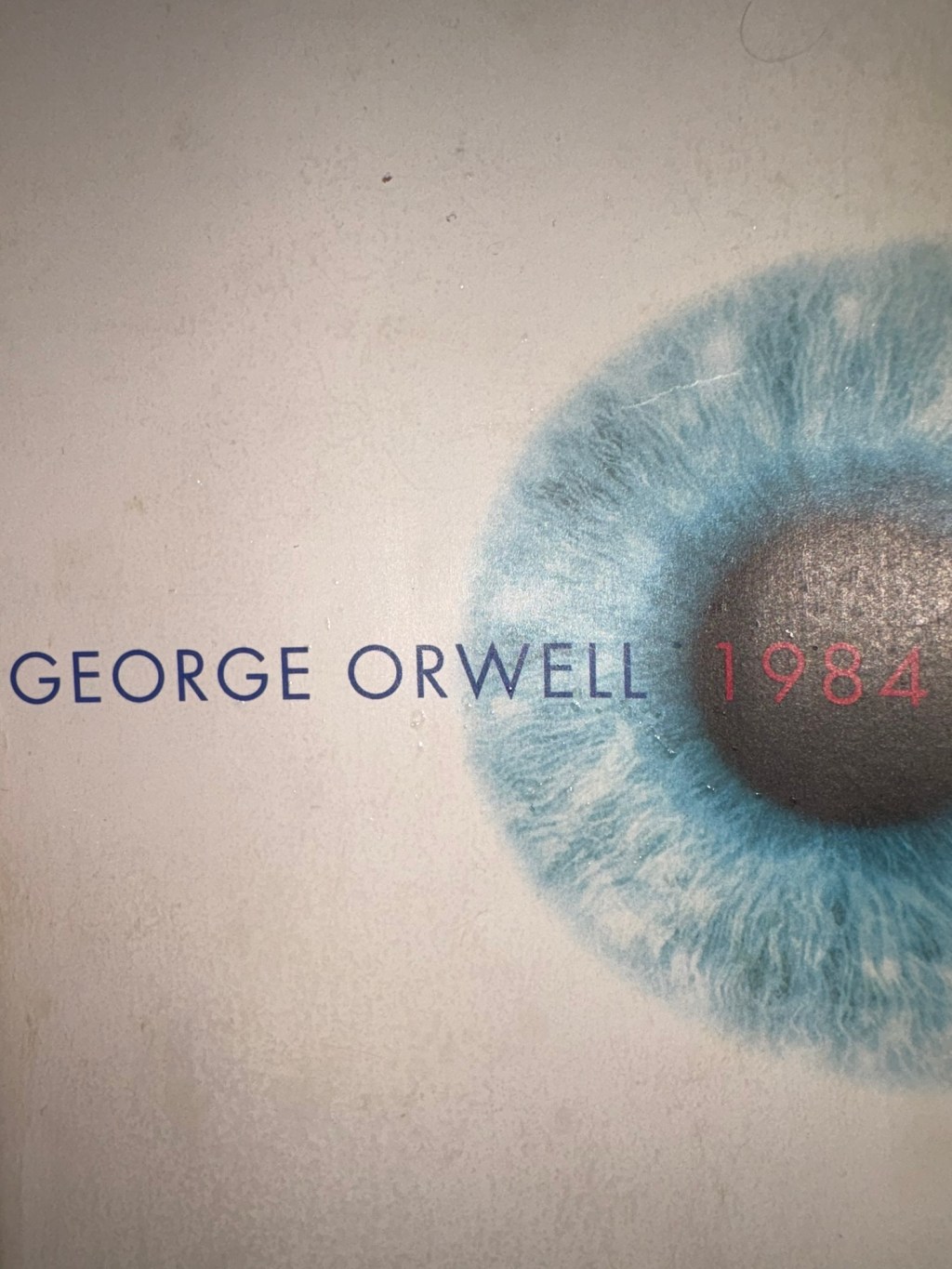
There are many themes in 1984 by George Orwell that I find fascinating: the concept of doublethink and newspeak conceptualized to overhaul collective consciousness and critical thought, the way propaganda is used in constantly perpetuating real time brainwashing, the normalization and desensitization of violence, dehumanization, and callousness of death by and to children, adults, and foreigners, the way the fabricated systematic hierarchy keeps the rich richer and the plebeians oppressed, and the erasure and rewriting of the past to keep a hold on the present and ensnare the future.
But even though all of those things can be their own article (let me know if you want that!), the main point I want to touch on here is how the main characters, Winston and Julia, actually know that they will be inevitably caught by the Thought Police for having a secret relationship, a fact they openly acknowledge several times, but decide to keep partaking in their illegal thoughts and actions anyway, purely to feel something in their otherwise mindless lives, despite staring down the threat of literal vaporization in the face.

The reason I want to focus on this and not any of the other very relevant and serious aforementioned themes is because I feel like there are many aspects in modern society that just make things feel hopeless, surprisingly similar (or not) to the book. Every single day is a headline or algorithm blast of how much the Earth is dying, everyone is out to get everyone, and the brutalization of what makes life worth living. Now, I’m not here to say negative and real world consequences aren’t true and aren’t happening, or to ignore/be ignorant to the very real problems of the world, but what the characters come to understand in the story is that when they finally get a taste of the simple things that were robbed from them, it’s like a blast of cold water to the face, a fire that’s constantly subdued finally lit, and despite the fear, they won’t willingly go back. When the machine of Ingsoc and Big Brother strips them of all autonomy, personal thought, and free will, they come to know that relishing in simple pleasures like good coffee, personal private time, the ability to engage in deep critical thinking, and the closeness that comes from physical and mental connection with another person, is worth it over the risk of being caught.
So how can this apply to your life? When it comes to mental health, intaking too much negativity and echo chambering can be really detrimental, which is constant for the characters in the book (and in our real life). Whether they believe the propaganda that spews from the Ministry of Plenty or not, they are constantly being force fed it and surrounded by it. This mirrors modern society in a lot of ways, especially with how news is consumed. Being informed isn’t inherently a bad thing, but you can’t stay in that space forever, hearing think pieces that mirror your own biases without any real critical train of thought. Breaking free from the rat race of your own life is just as important as it was for the characters in the book. Even if only for a few minutes, it’s equally meaningful for us to take a pause from the noise. Relish in any happiness and realness whenever possible. The screen can only tell you how to live so much, you have to experience the rest.
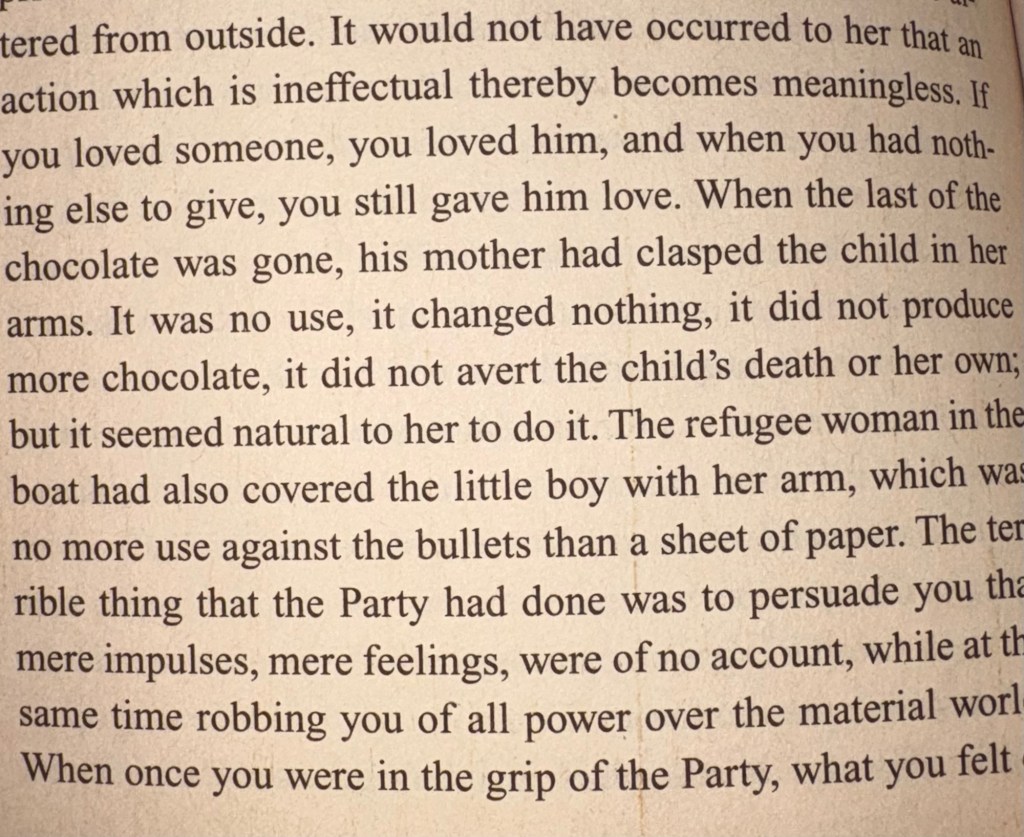
I don’t think that there is one perfect solution to solving the societal, systematic problems that have been built and enforced since before your existence, the main characters are constantly faced with the recognition and demoralization that the system is bigger than themselves as individuals. But, even so, I believe that sometimes all you have is yourself and all you can do is be there for yourself. Winston starts off the novel by buying a secret diary, his first lone act of stealthy rebellion. Just by taking that first step outside of his conditioning, the set of motions in the book are activated. The same can be said for your life. By putting forth the smallest intentional effort towards change, consciously deciding things can be different and you want them to be, the timeline can shift.
There are so many good things about this book that are as eternal and relevant as ever, nearly 70 years after publication. There are endless parallels to modern society that can be analyzed and broken down, but instead of discussing the doom in this particular piece, I wanted to express the good. Those few fleeting instances of real true purposeful feeling that the characters created for themselves, whether “hopeless” in the end or not, meant so much to them in those moments, that it gave them a drive to life they knew and felt was missing in the bleakness. It’s a hard lesson to realize that the only way to get through to the other side is to keep going, but it’s worth it to savor all the points of light along the way.
If you love this book too, leave a like!
Thank you for reading!!!



 Hot Girl Health
Leave a comment